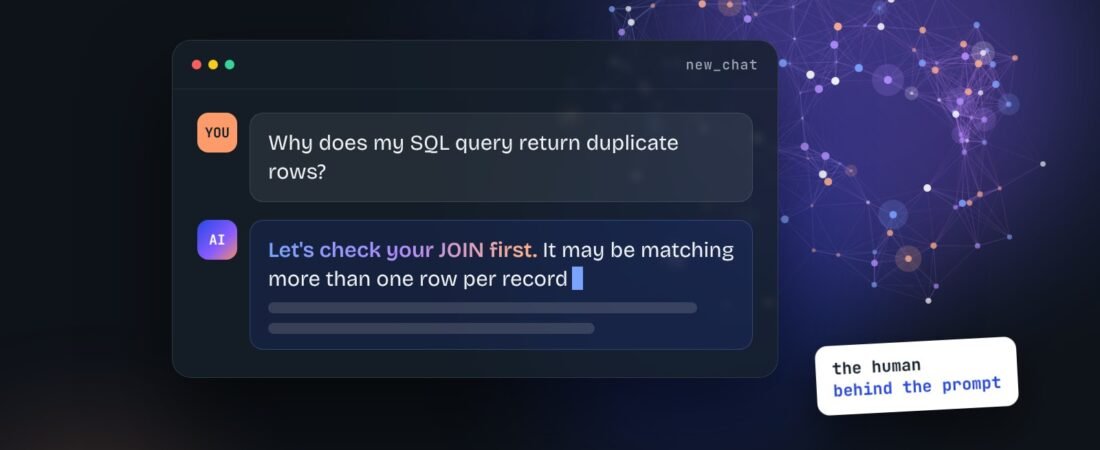
I started my career in tech at the age of 22, fresh out of a public university with a Bachelor of Science in Information Technology. Looking back, the way I learned to solve problems then and the way I solve them now feel like two different worlds. This is my story of that change, and of the companion that came along with it.
Before AI Was Everywhere
When I was a junior in 2018, AI was not yet the big thing it is today. It was mostly talked about as a model, something researchers built, and few of us imagined it would one day sit beside us at work. Back then, whenever I ran into a tech problem, I did what most students did: I searched, tested, failed, and tested again.
Solving an error code or fixing the format of an SQL query meant a long series of trial and error. I watched tutorial after tutorial on YouTube. I can honestly say I watched more tech tutorials than my favorite anime, and that says a lot. I subscribed to channels, and I spent hours on Stack Overflow, where tech leads and experts answered questions and where I could learn just by reading the discussions. Those communities taught me patience, and they taught me that every problem has a path to a solution if you are willing to dig.
Then Everything Bloomed
By 2020, and especially now in 2026, things have changed in ways I did not expect. The boom of AI has gone far beyond what I imagined. Results that once seemed out of reach now arrive in seconds, often better than what many of us expected from a machine. It has become a companion for even the most basic daily tasks, and people now use it for almost everything.
Like any tool, it has pros and cons. But I believe the real story is not about the tool itself. It is about how we choose to use it.
Claude, My Partner in Crime
As an IT and web integration specialist, I have gained a lot of experience through my work: technical support for our IT devices, configuration, account setup, security against cyber attacks, communication, and fixing issues with digital content. In all of this, Claude has been my partner in crime.
When I first used it, I thought it would be difficult. It was easy. It felt like talking to a person who seems to know everything. But I soon learned something important: it also needs someone to guide it down the right path. That is where human intervention comes in. A good answer depends on a good question, a clear goal, and a person who can tell when the answer is right and when it is not.
The Human Still Matters
AI is not perfect, and nothing is. It cannot do everything, and it cannot even start without a person writing the first prompt. That is why those of us who use it must be responsible and knowledgeable about how we use this technology. We should check its work, understand what we are asking, and keep learning.
Knowledge is powerful when used properly. And because of that, each one of us is responsible for the actions we take with AI.
A Closing Thought
AI is a tool to help people. It is not meant to be weaponized to bring terror or harm to the public. It can be used for countless things, so let us choose to use it for the better cause of humanity.
From YouTube tutorials and Stack Overflow threads to a companion that talks back, my journey has changed a lot, but one thing has not: the human behind the keyboard is the one who decides where the journey goes.
Thank you for reading my first blog post. I hope it inspires you to learn, to build, and to use technology wisely.